
The multi-disciplinary experience of the company all stages in developing projects, from initial concepts to implementation and maintenance.
- Project Identification/Desk study
- Due Diligence study
- Prefeasibility study
- Feasibility study
- Field Investigations:
Topographical Survey and map preparation
Hydrology and sediment study
Geological study and map preparation
- Structural Analysis and Design
- Transmission line study
- Preparation of Tender Documents
- Detail Engineering Design
- Construction Supervision
- Bill vetting
- Rehabilitation and Maintenance
- Engineering Guideline Preparation
AECPL is presently executing six hydropower projects designs, three hydropower construction supervisions and three bill vetting. AECPL had provided its services to more than 35 hydropower projects at different phases of study and implementation.
Converting Core strengths into customized solution by integrating indigenous and innovative inputs
No two hydroprojects are identical and has the same challenges. Every site is unique.Hydraulic and structural design, Sediment, Hydrology and Geological risks vary project to project in different phases of study, implementation and also in operation as well. AECPL beliefs integrative appraches including innovative and indangeneous inputs as oppertunities to overcome these challenges. The few examples are:
Bottom Intake :
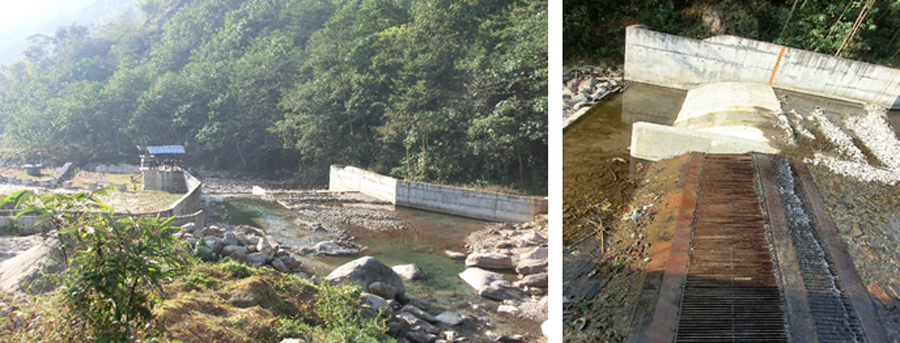
AECPL has used Bottom intake first time in Nepal; in Upper Mai C Hydroelectric Project and one rehabilated project named it Chanku Hydropower Project. Thease are in opertaional. AECPL also adopted bottom intake in many other projects which are designed by AECPL. Bottom Intake is very advantageous in steep topograhy like Nepal. The flow is captured by a transversal rack and a gallery located in the control crest in bottom intake.
Double Layered Orifice Intake :
Steep topography, fragile geology and intense rainfall have led to large flow volume and exceedingly high sediment transport in these rivers during rainy seasons. This has posed a challenge to many hydropower plants with respect to complete sediment exclusion at headworks. The deposited sediment at intake structures, chaannel may cause the cloging at intake and sediment reached at turbine causes severe sand erosion of turbines leading to loss in energy generation.. It is important to design the intake/headworks so that the sediment problem will be minimised. AECPL has introduced Double Layered Orifice Intake as a tool that an optimised sediment handling at Intakes of run of the river hydropower plants, is obtained through minimisation of the total investment and operation cost throughout the lifetime of the plant. Lower Hewa Khola Hydropower Project – 21.6 MW is one of the example of two headworks tapping for generation from single plant and already is in operation.
